Death of a Poet: Aimé Césaire 1913-2008

April 27th, 2008

Aimé Césaire

Poetry and the Political Imagination: Aimé Césaire, Negritude, and the
Applications of SurrealismLiP Magazine
July 9, 2001
http://www.lipmagazine.org/articles/featkelley_116.shtml

Poetry and the Political Imagination: Aimé Césaire, Negritude, and the
Applications of Surrealism

by Robin D. G. Kelley

Aimé Césaire demolishes the old maxim that poets make terrible politicians. Known in the world of letters as the progenitor of Negritude (the first diasporic “black pride” movement), a major voice of Surrealism, and one of the great French poets, Césaire is also revered for his role in modern anticolonial and Pan-African movements. While it might appear that the poet and politician operated in separate spheres, Césaire’s life and work demonstrate that poetry can be the motor of political imagination, a potent weapon in any movement that claims freedom as its primary goal.

Born on June 25, 1913, in the small town of Basse-Pointe, Martinique, Césaire and his five siblings were raised by their mother, who was a dressmaker, and their father, who held a post as the local tax inspector. Although their father was well-educated and they shared the cultural sensibilities of the petite bourgeoisie, the Césaires nonetheless lived close to the edge of rural poverty. Aimé turned out to be a brilliant, precocious student and at age 11 was admitted to the Lycée Schoelcher in Fort-de-France. Upon graduation in 1931, he moved to Paris and enrolled in the Lycée Louis-le-Grand to prepare for the grueling entrance exams to the École Normale Supérieure (a high-level teachers’ training college). There he met a number of like-minded intellectuals, most notably the Senegalese intellectual Léopold Sédar Senghor. Among other things, they began to study African history and culture, particularly the writings of German ethnologist Leo Frobenius, whose The Voice of Africa provided a powerful defense of Africa’s cultural and intellectual contributions to the world.

The twosome, along with Césaire’s childhood friend, poet Léon-Gontran Damas, launched a journal called L’Étudiant Noir (The Black Student). In its March 1935 issue, Césaire published a passionate tract against assimilation in which he first coined the term “Negritude.” It is more than ironic that at the moment Césaire’s piece appeared, he was hard at work absorbing as much knowledge about French and European humanities as possible in preparation for his entrance exams for École Normale Supérieure. The exams took their toll, for sure, though the psychic and emotional costs of having to imbibe the very culture Césaire publicly rejected must have exacerbated an already exhausting regimen. After completing his exams during the summer of 1935, he took a short vacation to Yugoslavia with a fellow student. While visiting the Adriatic coast, Césaire was overcome with memories of home after seeing a small island from a distance. Moved, he stayed up half the night working on a long poem about the Martinique of his youth–the land, the people, the majesty of the place. The next morning when he inquired about the little island, he was told it was called Martinska. A magical chance encounter, to say the least; the words he penned that moonlit night were the beginnings of what would subsequently become his most famous poem of all: “Cahier d’un Retour au Pays Natal (Notebook of a Return to My Native Land)”.

He did subsequently return to his native land in the early 1940s, shortly after “Cahier” was published, and he was joined by his wife Suzanne Roussy, a fellow Martinican student with whom he had worked on L’Étudiant Noir. They both took teaching posts in Fort-de-France and, along with other intellectuals such as René Ménil, Lucie Thésée, and Aristide Maugée, launched a journal called Tropiques in 1941. Its appearance coincided with the fall of France to the fascist Vichy regime, which consequently put the colonies of Martinique, Guadeloupe, and Guiana under Vichy rule and shattered any illusions Césaire and his comrades might have harbored about color-blind French brotherhood. The racism and authoritarianism of the regime was blatant and direct. Vichy officials censored and interdicted all literature they deemed subversive, thus forcing Tropiques’s editors to camouflage their publication as a journal of West Indian folklore. Yet, despite the repressions and the ruses, Tropiques survived the war as a major voice for Surrealism and a critical forum for the evolution of a sophisticated anticolonial stance as well as a vision of a postcolonial future. The Césaires and their fellow editors promoted a vision of freedom that drew on modernism and a deep appreciation for precolonial African modes of thought and practice, and produced a kind of merging of Negritude, Marxism, and Surrealism.

By the end of the war, Césaire became more directly involved in politics, joining the Communist Party and successfully running for mayor of Fort-de-France and deputy to the French National Assembly under the Communist ticket. His main concern, however, was not proletarian revolution but rather the colonial question. In 1946, he succeeded in getting the National Assembly to pass a law changing the status of Martinique, Guadeloupe, Guiana, and Réunion from colonies to “departments” within the French Republic. He believed that the assimilation of the old colonies into the republic would guarantee equal rights, but this turned out not to be the case. In the end, French officials were sent to the colonies in greater numbers, often displacing some of the local black Martinican bureaucrats. It was a painful lesson for Césaire, one that powerfully molded his first and perhaps most important nonfiction book, Discourse on Colonialism.

First published in 1950, Discourse on Colonialism is indisputably one of the key contributions to a wave of anticolonial literature produced during the postwar period. As with much of the radical literature produced during this epoch, Discourse places the colonial question front and center. In fine Hegelian fashion, Césaire argues that colonialism works to “decivilize” the colonizer: Torture, violence, race hatred, and immorality constitute a dead weight on the so-called civilized, pulling the master class deeper and deeper into the abyss of barbarism. The instruments of colonial power rely on barbaric, brutal violence and intimidation, and the end result is the degradation of Europe itself. Discourse, then, has a double-edged meaning: It is Césaire’s discourse on the material and spiritual havoc created by colonialism, and it is also a critique of colonial discourse.

Anticipating the explosion of work we now call “postcolonial studies,” Césaire reveals how the circulation of colonial ideology–an ideology of racial and cultural hierarchy–is as essential to colonial rule as the police and the use of forced labor. Furthermore, as a product of the post-World War II period, Discourse goes one step further by drawing a direct link between the logic of colonialism and the rise of fascism. He provocatively points out that Europeans tolerated “Nazism before it was inflicted on them…because, until then, it had been applied only to non-European peoples; that they have cultivated that Nazism, that they are responsible for it, and that before engulfing the whole of Western, Christian civilization in its reddened waters, it oozes, seeps, and trickles from every crack.”

The political implications for Césaire were that colonialism had to be overthrown and a new culture had to replace it, one that embraced non-Western traditions while also embracing the best that modernity had to offer. He outlined this argument in a paper titled “Culture and Colonization,” delivered at the First International Congress of Negro Writers and Artists in September 1956. Ultimately, Césaire’s insistence that colonialism and racism were the fundamental problems facing the modern world could not be reconciled with the Communist position that promoting proletarian revolution should take precedence over all other struggles. One month later, Césaire penned his famous “Letter to Maurice Thorez, Secretary General of the French Communist Party,” tendering his resignation from the party. Arguing that people of color need to exercise self-determination, he warned against treating the “colonial question…as a subsidiary part of some more important global matter.” Racism, in other words, cannot be subordinate to the class struggle. If following the Communist Party “pillages our most vivifying friendships, wastes the bond that weds us to other West Indian islands, the tie that makes us Africa’s child, then I say communism has served us ill in having us swap a living brotherhood for what looks to have the features of the coldest of all chill abstractions.”

Césaire, like his former student Frantz Fanon, was now convinced that only Third World revolt could pave the way for a new society. He had practically given up on Europe and the old humanism and its claims of universality, opting instead to redefine the “universal” in a way that did not privilege Europe. “I have a different idea of a universal,” Césaire explained to his former Communist comrades. “It is of a universal rich with all that is particular, rich with all the particulars there are, the deepening of each particular, the coexistence of them all.”

Césaire went on to found the Martinican Progressive Party and serve as mayor of Fort-de-France for the next two-and-a-half decades, and he continued to write. In 1960, he published Ferrements, a collection of 48 poems about black liberation and new possibilities created by independence. Using the metaphor of transforming slavery’s chains into metal armor, Césaire saw the future of Africa and the diaspora as a phoenix rising. A year later he released Cadastre, which included previous poems from Soleil cou Coupé and Corps Perdu. Whereas Africa was rising (with the exception of places still under white minority rule), Europe here is depicted as a land of petrifaction and rot. The themes of colonialism and postcolonialism dominated Césaire’s work during the 1960s, so much so that he increasingly turned to history in order to explore the problems and prospects of anticolonial revolution. In 1961, he published his second major work of nonfiction: Toussaint L’Ouverture: La Révolution Française et le Problème Colonial (Toussaint L’Ouverture: The French Revolution and the Problem of Colonialism). Césaire tried to show that the French Revolution failed as much as the Haitian Revolution to achieve true liberty. Toussaint not only wanted to destroy slavery on the island of Saint Domingue but wanted to turn these ex-slaves into efficient producers for a world market, to bring his country into the modern world as citizens of the French empire. While the revolution successfully fulfilled the first goal, his dream of a modern Haiti joining a French commonwealth as equal partners was an abysmal failure. That dream died with him in a cold jail cell in Napoleon’s France.

Unlike other critics, Césaire argued that Toussaint’s failure lay not so much in his ambition or his ideas as in his overreliance on the military to solve social, political, and economic problems. His critique of Toussaint carried with it a veiled critique of military dictators emerging in postcolonial Africa and Latin America–a critique made explicit in his 1963 play, La Tragedie du Roi Christophe (The Tragedy of King Christophe). While grounded in Césaire’s reading of Haitian history, it was also a critique of François Duvalier, Haiti’s ruler from 1957 through 1971. It explores the many dimensions of postcolonial corruption, depicting Christophe as a deeply flawed but well-meaning tyrant exploiting the black masses trapped on the island. Césaire’s next play, Un Saison au Congo (A Season in the Congo) (1965), about Patrice Lumumba and the struggle for independence in the Congo, went one step further, suggesting that only revolution and the violent overthrow of these dictatorships could bring about any real change.

In his final exploration of colonialism, Césaire retreated from modern history and turned to Shakespeare as his vehicle. His 1969 adaptation of The Tempest (Une Tempête) explored the relationship between Prospero the colonizer and his colonial subjects, Caliban and Ariel. Caliban rebels outright, whereas Ariel attempts to appeal to Prospero’s moral conscience. Caliban is eventually crushed when he attempts to become his own master, but not before figuring out that Prospero’s domination and claims to superiority are based on lies. Caliban’s final speech could have come straight from Césaire’s mouth, or the mouths of the radical black intelligentsia produced by colonial education:

Prospero, you are the master of illusion.
Lying is your trademark.
And you have lied so much to me
(lied about the world, lied about me)
that you have ended by imposing on me
an image of myself.
Underdeveloped, you brand me, inferior,
that’s the way you have forced me to see myself.
I detest that image! What’s more, it’s a lie!
But now I know you, you old cancer,
and I know myself as well.

During the course of the next three decades, Césaire continued to write but moved away from the epic hero and the problems of the colonial encounter. The Surrealism that had always undergirded his work resurfaced more explicitly in his 1976 collection Noria as well as his last play, Moi, Laminaire (1982), both of which explored language and reveled in the ambiguous, dreamlike characteristics of the unconscious. The weapon of poetry may be Césaire’s greatest gift to a modern world still searching for freedom. As one of the last truly great “universalists” of the 20th century, he has had a hand in shaping or critiquing many of the major ideologies and movements of the modern world—Marxism, nationalism, Pan-Africanism, and fascism, among others. All of these ideas are rooted in notions of progress, all are products of modernity, and all fall short when it comes to envisioning a genuinely emancipatory future. Césaire must have known this, which is why more than half a century ago he wrote: “Poetic knowledge is born in the great silence of scientific knowledge.”

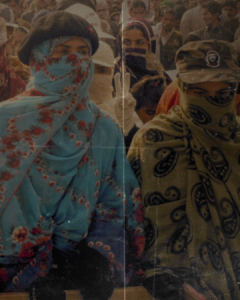
Missing in Pakistan - Video

April 6th, 2008

The Pakistani Elections: Hope and the Problem of Islamic Extremism

February 22nd, 2008

pak-elections-and-the-islamist-threat-2.doc

Fawzia Afzal-Khan
Professor, Department of English
Montclair State University

khanf@mail.montclair.edu
Read the rest of this entry »

U.S. Ambassador Anne Peterson should leave Pakistan

February 22nd, 2008

Friday, February 22, 2008

U.S. Ambassador Anne Peterson should leave Pakistan

Yusuf Nazar

The U.S. Ambassador is blatantly interfering in Pakistan’s internal affairs and trying to influence the formation of a new government in Islamabad. The New York Times (Feb. 22) reports, ” as the negotiations proceeded between Mr. Sharif and Mr. Zardari in the last two days, political circles here were awash with talk that Washington was interfering, trying to micromanage a process in which the Bush administration has much at stake.

The impression that the United States was meddling was fortified Wednesday when Mr. Zardari was summoned to the American Embassy for a meeting with the ambassador, Anne W. Patterson. Afterward, Mr. Zardari was portrayed as a creature of the Americans who wanted him to work with Mr. Musharraf, a negative perception for a politician in a country where recent polls show the United States has a favorable rating of just 16 percent.”

This seems like a crude attempt by way of a ‘careful leak’ apparently made through the U.S. diplomatic channels to belittle Mr. Zardari and defame him since he has apparently refused to play ball with the Americans and has opted to work with the PML(N) whereas the Bush administration officials want him to work with Musharraf and his allies in the PML(Q) - a group called as political orphans by late Benazir Bhutto.

According to a report (Feb. 22) in the News International by its correspondent Ansar Abbasi, “although, Zardari did not talk of Washington’s pressures, sources in the party confirmed that the Americans had brought tremendous pressure on the PPP co-chairperson to make a coalition government with the likes of the PML-Q and MQM but not with the PML-N.

The N-League’s foremost priority for the reinstatement of the deposed judges is not getting approval from Washington despite the fact that within Pakistan this is the most popular demand of the masses. Not only the Americans are directly influencing the party to make what many see as an “artificial” coalition government in Islamabad, some pseudo intellectuals are also pursuing the same agenda.”

The Daily Times (Feb. 21) reported that, “a delegation of US senators visiting Pakistan met Pakistan People’s Party (PPP) Co-chairman Asif Ali Zardari at the US embassy here on Tuesday and urged him to ally with moderate forces to form a democratic government. US Ambassador Anne W Peterson was also present on the occasion. The delegates condoled with Asif Ali Zardari on his wife and former prime minister Benazir Bhutto’s death and acknowledged Benazir’s struggle for democracy. The delegation of US senators includes Senator John Kerry, a former US presidential candidate, Senator Joseph Biden and Senator Chuck Hagel.”

The Americans and particularly its Ambassador in Pakistan should know that the people of Pakistan have voted the Pakistan People’s Party -headed by Mr. Zaradari - as the largest political party and he therefore should be treated with due respect and courtesy. But more importantly, it is high time that junior level American diplomats should stop trying to micro manage Pakistan. Another U.S. diplomat - its Consul General in Lahore - met Aitzaz Ahsan and tried to persuade him to that the PPP should work with Musharraf as President.

The level of interference by the U.S. diplomats in Pakistan has crossed all limits of diplomatic norms and the tolerance of Pakistani people. It is about time that the people demand that the U.S. Ambassador Anne Peterson immediately leave Pakistan. The APDM and the civil soceity- particularly - the lawyers should demand this as a sign of protest by the Pakistani people against the American support for dictator Musharraf.

http://pakistanmartiallaw.blogspot.com

Editorial: NP 9

November 5th, 2007

‘Who’ll dare to drink this wine of love that is blood and poison…?’

An interpretation of Plato’s Republic and Symposium that I find compelling sees in laws and in particular constitutions loveable ‘beauty’.  Such value is put on this beauty that Plato has Doitima explain to the puzzled Socrates that love must be directed to these entities rather than devoted solely to a ’single human body’ of a beloved or even his/her ‘mind’; ultimately it is love directed to this beauty that makes for a good human life.  In Doitima’s words, “…the greatest and most beautiful kind of practical wisdom by far is that concerned with the right ordering of cities and households, for which the name is temperance and justice”.  Indeed, this is a strange thing to love – a constitution.  Yet, this is a worthy love.  Laws/Politics form, structure, and create the very bearing that we take – they certainly do not form a totality otherwise there will be no space for resistance and creativity but they are nonetheless powerful instruments.  For example, they govern my relation to wages, to government, to the ‘other’, to the polity and even the remotest of laws eminent a ‘good’, a ‘bias’, a ‘corruption’ – they are powerful.  Plato gives as image in the Republic of subjects living under the sun/shadows.  For us laws emit these rays.  We literally live under them and they among other things interact to curtail or enhance our dreams and humane aspirations.  They are certainly not neutral or value free as some scholars from the liberal tradition would try to convince us.  Though a gross generalization, one can still say combatively, as they stand they are generally not worthy of love for they reflect or are the instruments of ‘national elites’ and over the last three decades have been increasingly shaped by the gospel of neo-liberal capital.

However objectionable we find the mysterious metaphysical entities Plato fathomed and the inherent elitism and conservatism he professed, we must agree with him in the value of engagement with Politics and learn with creativity and intelligence to enliven Political institutions to reflect our dreams, desires, hopes and love.  And indeed from Caracas to Islamabad (via London) forces assemble themselves to move precisely to reshape power and laws away from ‘national elites’ and towards the redistribution of ‘power and wealth’.

Caracas and Article 88.

When Nora Castaneda  was asked about the reaction of grass-root women’s groups to the failed coup by the Oligarchy to oust Chavez in 2002, she replied,
“grassroots women had gained so much with the revolution [Bolivarian] that to lose it would have been unbearable.  The coup was like the loss of a precious loved one: we were in mourning but ready to fight”.    Nora also knows about fighting for constitutional change.  She writes of their involvement in the Constitutional Assembly of 1999, ” we women organized and prepared a document, and brought it to the Constituent Assembly.  And for four months, for the entire duration of the Constituent Assembly, we were there submitting our demands, our proposals…as a result this is probably the most revolutionary constitution in the world in terms of gender equity”.  In particular, Nora is proud of Article 88; it is worth quoting:

The State will guarantee equality between men and women in exercising the right to work.  The State will recognize housework as an economic activity that creates added value and produces wealth and social welfare.  Housewives are entitled to social security in accordance with the law.

The recognition of household activity as producing wealth in the economy and the granting of remuneration for this work is necessary and overdue.  Nora explains its necessity in the context of Venezuela and its role in alleviating poverty (a logic and argument that is applicable beyond Venezuela).  She tells us,

“We had determined…that more than 65% of Venezuelans lived in conditions of poverty, and that 70% of these were women.  This is to say, in Venezuela, as almost everywhere else in the world, poverty has a woman’s face….We had also determined that in the poorest communities in most of the country women were doing three jobs.  They worked in the home –unremunerated housework; they worked outside to feed their children and because they were the head of the family; and on top of that they worked for the community, because they needed some basic services for their families”.

She concludes, “that if the problem of poverty was to be tackled it was necessary to invest in women”.   The remuneration partly comes from guaranteed Social Security which in Venezuela means a guarantee of  healthcare, education, decent housing, training, the right to work.   It is long overdue.  Selma James writing in 1970’s explains the connection between housework (often women) and reproduction of (this is Selma quoting Marx) “the laborer himself”:

First it must be nine months in the womb, must be fed, clothed and trained; then when it works it bed must be made, its floors swept, its lunchbox prepared, its sexuality not gratified but quietened, its dinner ready when it gets home, even if this is eight in the morning form the night shift.  This is how labour power is produced and reproduced when it is daily consumed in the factory or the office.  To describe its basic production and reproduction is to describe women’s work.

The argument is precise, simple and irrefutable.  Given that household work (often done by women) contributes to the creation (production) and maintenance  (reproduction) of the labour force it constitutes economic activity.  In Modern States productive economic activity is variously rewarded with ‘wages’ and other benefits such as pensions, social security, etc.  As matters stand household work unjustifiably goes unrewarded and unrecognised.  If we agree that housework is productive – and to refute this would be to refute the experientially obvious -  then we should mount a case for Houseworkers (often women) to be remunerated from the economy and by the state for this work.

However, the current situation, one that must be challenged, appends household workers (almost always women) to the ‘male’ wage.  Creating social and economic dependency for house workers (women) and alienation from their labour and work – that production of the labourer him/herself.

To address the problem of household workers (often female) appendage to the ‘male wage’ Liberal Feminists have variously campaigned for recognition of the value of household work (but not for it to be compensated) and also encouraged household workers (women) to join the formal waged economy.    Indeed, there has been a vast increase in the number of women is the labour market.  However, this is not changed the situation of women/household workers but often reduced the richness of their being.   Increased female participation in the economy doubles the workload and responsibility of the worker concerned.   Formal economic activity is added to household work.  To paraphrase Marx the household worker is alienated at work and at home.  Secondly, the innate beauty of household activity becomes taxing and further depletes the workers capacity for living.  For example, for a mother (or father) caring for his/her son is a beautiful part being human.  Rather then adding further the weight of waged labour our society should recognize this and we should work to create a society and government structures where this is possible.  It would enrich our human life. The solution presented by Nora, Selma and other radical women’s movement then calls for household work to be remunerated.

London and the All Parties Conference.

On July 7th and 8th in London an All (oppositional) Parties Conference assembled to form a united front against the predatory military of Pakistan. 70 plus politicians from 30 plus parties were given a welcome break from the heat of the Pakistani summer and hosted in Millennium Gloucester hotel in Central London.   Indeed, we can have little respect for some of the represented parties in particular the Pakistan Peoples Party (the leader of which, Benazir Bhutto, and her husband, Asif “Mr 10%” Zardari, when last in power plundered £1.5 billion from the state – according to Pakistan’s National Accountability  Bureau -  and reliable sources allege Mr. Zardari’s involvement in murders of opponents both political and business related) and Nawaz Sharif’s Muslim League (the second biggest opposition party and equal thuggish and corrupt when in the 1990’s they formed the government).  Nonetheless, the will to dialogue and the attempt to forge a united opposition is welcome. The call and the fight that must be orchestrated behind this call for democracy is a necessary battle against the present predatory military elite – which operates with a quasi colonial form of management of the states power and a distribution of the wealth that 160 million people and vast resources generates, by partitioning and dividing power, goods and asserts of the country among the military elite, segments of the feudal elite and the international business elite (but seldom any other strata’s of society and seldom instituting institutions for the benefit of the people).  And though the opposition today constructs itself out of large elements of discredited political parties, Islamist parties, lawyers, provisional nationalist groupings, and various untried political organisations this ‘monster’ (as a Pakistani friend described it) nonetheless forms one necessary bed-rock for resistance to a Military (and its feudal and business elite lackeys) that blunders the country and in the process deforms the life and dignity of its people.

Here it is worth noting the research of Ayesha Siddiqa.  In Military Inc. she shows how today the military has come to controls 11. 58 million acres of land that is 12 per cent of the total 93.67 million acres of state land, 6.8 million of which is owned by individual members of the armed forces.  A further 6.9 million acres has been acquired by the military for redistribution to its top officials.  In 1981 an acre was being sold (to select army personal only) for as little as $0.86 – this in a country with over 30 million landless peasants.  This land is often acquired with the full use of force.  Siddiqa writes, “the plight of the fishermen in Sindh at the hands of paramilitary forces, and the landless peasants in Okara after 2001, indicate the usurpation of resources by the military.  In both cases the military (including the paramilitary) literally fought against the segments of the community involved in order to control the resources”.   This is not mention the militaries use of its power towards usurping resources to build and run sugar mill, petrol pumps, corn-fake cereals, shopping mulls, etc.

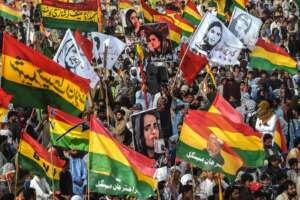
Not only has the military formed itself as a predatory business elite, its generals do not hesitate to use force against legitimate state players.  Over 200 Baloch and Sindhi nationalists have been made to ‘disappear’ instead of being brought into the political system.  Following the same instincts, on the 12th of May people gathering in Karachi to protest against the government in support of the (then) dismissed Chief Justice of the Supreme Court were shoot (with more then 40 killed) by the lackeys of Musharraf government.  Though it may be controversial for some liberal ears the recent murder of 80 people in the Lal Mashid (Red Mosque) is equally frightful.  Again, force was used as the first rather then last option.  The undue use of force in appropriating the nations resources, the use of state terror against any viable and organised political opponent, the murder of its own citizens (be it Islamists of the Lal Mashid or the democrats fighting for the rule of law) has torn in the hearts of the people any garment of legitimacy Musharraf and this party claimed.  The ‘international community’ – self interested and unprincipled as always - continues to deal and openly support this dictatorship and in so doing is complicit in the oppression reigned on Pakistan, all progressive forces internationally must seriously question their dealings with this illegitimate predatory regime.

A ‘Monster’ then is  indeed needed to curtail this illegitimate predatory regime headed by Musharraf.   The call of this ‘Monster’ centres around two struggles.  Firstly, a call for fair elections and a demand that Musharraf either remain the head of the army (for which he has pasted the retirement age) or run for president in a fair election but no-longer hold both positions.  Secondly, a different segment demands the independence of the judiciary in light of the politicised dismissal of the Chief Justice of the Supreme Court.  The struggle of this ‘monster’ is difficult.  It faces a military elite happy to kills its citizens.   It is also a far cry from Article 88 or a Bolivarian revolution but fair elections and the withdrawal of the military from political life of the country are necessary steps.  The slogan all over the country, “Go Musharrah Go!” is motivated and pertinent but it will be long struggle and given the record of the Dictatorship it is likely to murder more of its citizens.  However, the call must also proclaim a turn towards ’self-reliance’ (from US commands and money) and with it the redistribution of power and wealth away from ‘national elites’ and towards the instituting of health care, education and social security.

What is evident and must be engaged with (joined!) is the mobilization of groups towards the reshaping of the state, politics and the constitution so they better reflect the aspiration of people.  Here I am reminded of the call to protest of one the world’s finest poet Faiz Ahmed Faiz.  Who, not unlike Plato (and one suspects Nora), imbues a deep love towards the ‘just’ state in his work– the beloved is the ‘just state to come’:

…Convoys of pain bearing cargoes of love must keep moving,
but someone else must now wave them forward.
And others must tend the garden where ardour blooms –
I can’t: the dew of my eyes dried: I won’t weep again.
All rapture, the pure madness of passion, has ceased,
And no one’s left to bear the rain of stones.

That road behind me: it was always the Beloved’s street,
It is now the color of her lips;
My blood, like a flag, has been unfurled there.
I have nothing left to give.

And a glass is being filled again.
Friends, let one of you now come forward,
For the cry has begun: “Who’ll dare to drink this wine of love
That is blood and poison?  Who? (…)

Let us all, in our sphere and way, come forward.

Qalandar Bux Memon

Lahore and London, July 2007.

Interview with Central America Womens Network

September 28th, 2007


Online Videos by Veoh.comhttp://www.veoh.com/videos/v1222656Wk7sdWrY
Alexandra Popescu and Qalandar Memon talk to Rebeca Eileen Zúniga-Hamlin of the Central Americas Women’s Network about their work.www.cawn.org

Moral hazard: Capitalism for the workers, socialism for the bankers?

September 27th, 2007

greenspan.jpggreenspan.jpg

Moral hazard
Capitalism for the workers, socialism for the bankers?

Bob Hancké, LSE and CEU
19 September 2007

A few months ago, many central banks in the advanced capitalist world estimated inflation risks to be, as they call it in their sterile lingo, on the upside: growth was picking up in the Euro-zone, unemployment was slowly falling, and where they still mattered trade unions were preparing robust (though hardly excessive) wage demands. Ignoring the monetarist dogma that denies a relation between unemployment and inflation, monetarist central bankers were quick to raise the spectre of higher interest rates to pre-emptively curb wage-push inflation in the innocent early days of the Summer of 2007. The sub-prime mortgage crisis that spread from the US to the rest of the world rapidly changed that. Within days, the Fed and the ECB responded by making cheap credit available, and by mid-September the Fed had even lowered interest rates. Only the Bank of England (BoE) held out, directing banks who felt the credit squeeze to its emergency facility where they had access to cash at mildly punitive rates –or so it seemed. When the de facto sub-prime mortgage bank Northern Rock in the UK, who had thrived on what was basically an unsustainable ‘innovative’ financing model (borrowing cheaply in capital markets and then using that cash to offer its own version of cheap mortgages to customers who were probably deemed ineligible for such loans by other banks, without a solid capital base of its own) was about to fold, the BoE also relented and started offering cheap credit, below market rates, to banks in trouble.
Modern political-economy has a word for what the central banks did: moral hazard. The idea is simple and a principle known to every parent: you do not reward someone who does something stupid, but punish them –primarily to set an example for others who might be about to embark on the same path. Rewarding bad behaviour, however, was exactly what central banks have been doing since the Summer of 2007. The sub-prime mortgage market in the US (and probably the UK) was nothing more than an attempt by some, more or less reputable banks, to scrape the bottom of the mortgage barrel, go after the customers turned down by other banks, and then offer them mortgages that were both so large and so fragile that any downturn in the markets would lead to a small crisis. The chances of a downturn were, in the conventional wisdom, very low, however. The central banks’ low interest rate policies over the last decade or more –low for capital markets, that is: in many OECD countries interest rates usually were significantly above growth rates, thus lowering investment opportunities and therefore jobs— implied that many of us would try and get their hands on a house; real estate prices would therefore continue rising, and mortgage banks could call in a handsome collateral if poor families were to default on their mortgage. The free lunch existed after all. Thus, with the chances of a collapse of the housing market exceedingly low, mortgage lenders experimented with ever more daring products. When, eventually, the housing market in the US turned down, many of these low-end lenders were caught in the storm. [Since open goals should not be avoided, even in political economy, compare this with what would happen when workers exploit an opportunity in labour markets. If, say, the trade union IG Metall, which organises highly-skilled workers in Germany who make very successful high value-added products (cars and car parts, machine tools, power plants, or sophisticated consumer electronics) that sell for premium prices in world markets, raises the spectre of a wage demand that roughly matches productivity in a growing export sector (and is therefore by and large neutral with regard to profits or inflation), or if governments, eager to steer away from a social and political calamity by negotiating a subsidised wage package for large companies, sectors or regions in trouble, the politically independent central banks’ response is always the same: ‘it’s a bitter medicine, but it needs to be taken for the wider benefit of economy and society, else we will be forced to raise interest rates to get you back in line’.]
Only two decades ago, as the savings and loans scandal in the US in the 1980s demonstrated, a crisis in the sub-prime mortgage market in the US would have been a sad thing for the American economy –with perhaps some minor repercussions for the rest of the world—but it would not have been a disaster for most of us outside the US, since capital markets more or less adhered to national or at least international regional borders. Capital controls before the 1970s and ‘conservative’ domestic customer orientations of banks since then made it as good as impossible for a crisis in one country to dramatically infect others. Think of it: even the Argentine monetary collapse in 2000-01 had few implications outside Latin America; similarly, the Japanese deflation of the 1990s was sad for them, but Europe and the US faced few direct problems as a result. Things were a bit more tenuous with the Asian financial crisis of 1997: for the first time a chain reaction on the other side of the world could have brought both the US and (much weaker) Europe on its knees. But eventually that cloud passed as well.
The mortgage credit crisis of the Summer of 2007 left little doubt that the international integration of capital markets now exposed practically every bank in the world to the ups and downs of a single national financial market –especially if that is the largest financial market in the world. At some point, no one in the industry had any idea of the extent to which European banks were exposed to the US mortgage market; what has become clear over the last few weeks is that by buying mortgages in the secondary markets (ie. bonds that covered the risk of the banks that actually had lent the money to homebuyers) and, as we are about to find out in the near future, even in a tertiary market (where those banks that took over the risk from the primary market in the secondary market sold their bonds in turn), many banks in Europe and beyond were directly implicated by the US catastrophe. In July 2007 the financial world raised many an eyebrow when two large German banks –imagine: German banks, hitherto the epitome of financial conservatism!— admitted their overexposure to the US mortgage market. Then credit seemed to dry up in the late August and early September days, when banks, unable to assess their exposure to the collapsing US mortgage market, simply stopped trusting each other’s capacity to repay inter-bank loans. What happened then is pretty straightforward: when you cannot tell if the bank that wants to borrow from you may or may not be around the day after tomorrow (and in the case of the latter taking your cash with it on the road to the dustbin of history), you prudently don’t lend money to any of them. A crisis was born.
Over the last few weeks and months, several remarkable things happened in the margin of this crisis. The first is that while anyone whose brain was not hardwired to religiously praise unfettered free market forces could have seen this train coming, all acted surprised when it finally went off the rails. Both in the US and the UK –the two places where housing prices have reached ridiculous levels recently— some observers had noticed the parallels with the Japanese real estate bubble of the 1990s. Since 2000 at least, everyone agrees that housing prices in the UK have been rising at an unsustainable rate –yet they kept on going up. The second is more a matter of Schadenfreude than an analytical point (but, again, applying the principle that you should not miss open goals): the mouthpiece of global capitalism, as it calls itself, has been remarkably quiet. In the week when the proverbial excrement and ventilator met, The Economist –usually rather eager to lecture the world on the vicissitudes of government intervention in the economy and to sing the praises of deregulated economies such as the UK and the US—kept a low profile and decided that many other news items were far more important than the public rescue of several banks who had become practically insolvent after a misguided venture into the deregulated financial markets (The Economist 150907). This particular form of cognitive dissonance spread remarkably rapidly: whilst critics such as my LSE colleague Willem Buiter quite rightly lambasted the central banks on his blog for selling out (or buying in, as the metaphor might be used in future), many of the previously tough guys and girls in the financial sector were wondering if the reaction of the BoE and the Fed was commensurate with the size of the crisis and if more intervention with public funds, and sooner, might have been helpful (IHT 190907). A fast rewind of the tape, some minor editing, and you could imagine hearing a tape of British trade unionists condemning the government for not saving British Leyland. The final and possibly most important conclusion to draw from this recent episode is that central banks, by throwing overboard their usual caution and flooding the markets with cash, have unequivocally demonstrated the limits of their independence. Part of their reaction was construed as a reasonable attempt to calm the waters and avoid a financial crisis which would eventually make its way into the real economy –ie. ‘please their political lords and masters’ in Sir Humphrey’s sarcastic words. But a large part ultimately was nothing more than ensuring that very few Porsche dealers would suffer a bad year. Put differently, the central banks’ reaction to the turmoil in financial markets left little doubt about the true nature of the relation between a central bank and the rest of the world: central banks are not agents acting in the interests of the population at large (as they should be, given that they are mandated non-elected public agencies), but appear to constitute, paraphrasing the wry expression coined by Marx and Engels, an executive committee of the financial sector.
Ironically, Martin Wolf of the FT was one of the first to spot this scandalous contradiction: we cannot have two worlds, he argued, one in which the workers are subjected to the chill winds of globalisation, and another one in which the bankers are cushioned against these very same chill winds by their chums in the central banks. If you believe, as he does, that free markets in a globally integrated economy are fundamentally a good thing for the world (a big if worth debating on its own terms but not now), then we all (!) have to take the bad with the good and accept that poor business decisions eventually weed themselves out. Wolf’s analysis, so much is obvious now, is built on very thin foundations –unless he is a modern-day equivalent of the utopian socialist who believed that human beings have an innate disposition to individual sacrifice for the collective good: bankers are just as narrow-minded in the pursuit of their interests as the airline pilots or metro-drivers in Paris are (although those people have jobs that will actually cost lives if they do not do them right –but we’ll ignore that detail), and use every (political) means at their disposal to safeguard their livelihood. We made it easy for them, let’s face it: by giving central bankers, who dine with these guys, buy their suits in the same expensive stores, and use the same hard-boiled language, independence in the way we did over the last few decades… well, it’s hard to avoid the words ‘fox’ and ‘chickens’ coming to mind. We all agree that no farmer in his or her right mind would open the gate to the chicken coop, invite the fox in, and then close the gate, right…? Makes you wonder what we have been doing.

Sizemo and Satchmo: Love

September 24th, 2007

love

Problems.

September 24th, 2007


problems

Slavery: A Shark’s perspective

September 24th, 2007

Slavery: A Shark’s perspective

A strange text sheds new light on the true roots of abolition

This year and next mark an important historical anniversary: Two centuries ago, both the United States and Great Britain abolished the African slave trade.

By the time they did, the trade had carried 9 million Africans to New World plantations, where they would live under the lash and produce the largest planned accumulation of wealth the world had yet seen. Abolition followed a long and determined campaign waged by antislavery activists on both sides of the Atlantic.

But who really brought the slave trade to an end?

In popular history, the people who abolished the slave trade are seen virtually as saints. They were somber, often dressed in black; they were devout, earnest, and good; they were the very embodiment of Christian virtue. In New England, many were descended from Puritans and reflected their austere and humorless ways. In England they were epitomized by the aristocratic evangelical William Wilberforce, the voice of abolition in Parliament. The recent movie “Amazing Grace” portrays him as a selfless, somewhat sickly angel who loved animals, servants, Africans, and God. Piety has long been seen as the hallmark of abolitionists on both sides of the Atlantic.

If that were the full story, though, it would be exploded by this document. While working in the special collections library of Bristol University in England on a book on 18th-century slave ships, I found an almost completely unknown broadside entitled “The Petition of the Sharks of Africa.” It looked like any other printed petition, elegant in its composition, suitable for presentation, addressed “To the Right Honourable the Lords Spiritual and Temporal of Great Britain, in Parliament assembled.”

It was, however, a vivid and harsh piece of satire. In fact it claimed to have been written by the “Sharks of Africa,” who declared themselves to be a numerous and flourishing group thanks to the many slave ships that visited the coast of West Africa. From these vessels, they explained, they got “large quantities of their most favourite food - human flesh.”

When the dead were thrown overboard, the sharks devoured the corpses. Sometimes they got live flesh, when African rebels who preferred death to slavery jumped overboard. When slave ships were “dashed on the rocks and shoals” of the region, throwing “hundreds of human beings, both black and white” into the water, it was a feast.

The sharks were writing to the British Parliament kindly asking them not to end the slave trade. Taking a sensible conservative view, the sharks denounced the abolitionists’ “wild ravings of fanaticism,” confident that their benevolent lordships would not let His Majesty’s loyal shark subjects starve. The petitioners were sure that they could count on “the wisdom and fellow-feeling” of the House of Lords. Sharks should stick together, after all.

Nothing I had read had prepared me for such a document. Here, unexpectedly, was a dark and daring kind of humor I had never known to exist among abolitionists.

Further research revealed that it had been republished widely, in Edinburgh, Philadelphia, New York, and Salem. I concluded that “The Petition of the Sharks of Africa” had been written by a Scot named James Tytler, who was a physician, poet, composer, an editor of the Encyclopedia Britannica, and Britain’s first hot-air balloonist. For his radicalism, he was eventually arrested and charged with sedition, only to flee into exile in 1793, first to Ireland, then to Salem. His contribution has never figured in the histories of abolition - partly, I am convinced, because it does not fit the enduring image of abolitionists.

The document joins a long string of new findings that have changed our understanding of who the abolitionists were. Working-class men and women protested the trade through boycotts; sailors smuggled pamphlets and told their horror stories to activists ashore. The front line of the war against human bondage was occupied by the enslaved themselves, whose resistance sent shock waves around the world, terrifying many and inspiring some. Their names may be lost to the history books, but they anchored a complex and diverse social movement.

Why do we need to know this today? First, it is important to understand that the abolition of the slave trade, and of slavery itself, was not a gift from on high. William Wilberforce did not abolish the slave trade, as “Amazing Grace” might make it seem, just as a lone Abraham Lincoln did not free the slaves. It will no longer do to pretend that a “great man” did things that are more accurately described as a result of a complex historical situation and a many-sided resistance.

Second, it is important to people demanding justice and reparations today - whoever and wherever they may be - to know that their forebears played an important role in bringing the slave trade and indeed the entire institution of slavery to an end. We owe the end of the abolition of the nefarious trade not just to aristocrats and Puritans, but to enslaved rebels, to factory workers and sailors, and to at least one irreverent Scottish daredevil.

Marcus Rediker is a professor of history at the University of Pittsburgh. His new book, “The Slave Ship: A Human History,” will be published by Viking-Penguin in October.

Published September 23, 2007 - Boston Global: http://www.boston.com/news/globe/ideas/articles/2007/09/23/slavery_a_sharks_perspective?mode=PF